
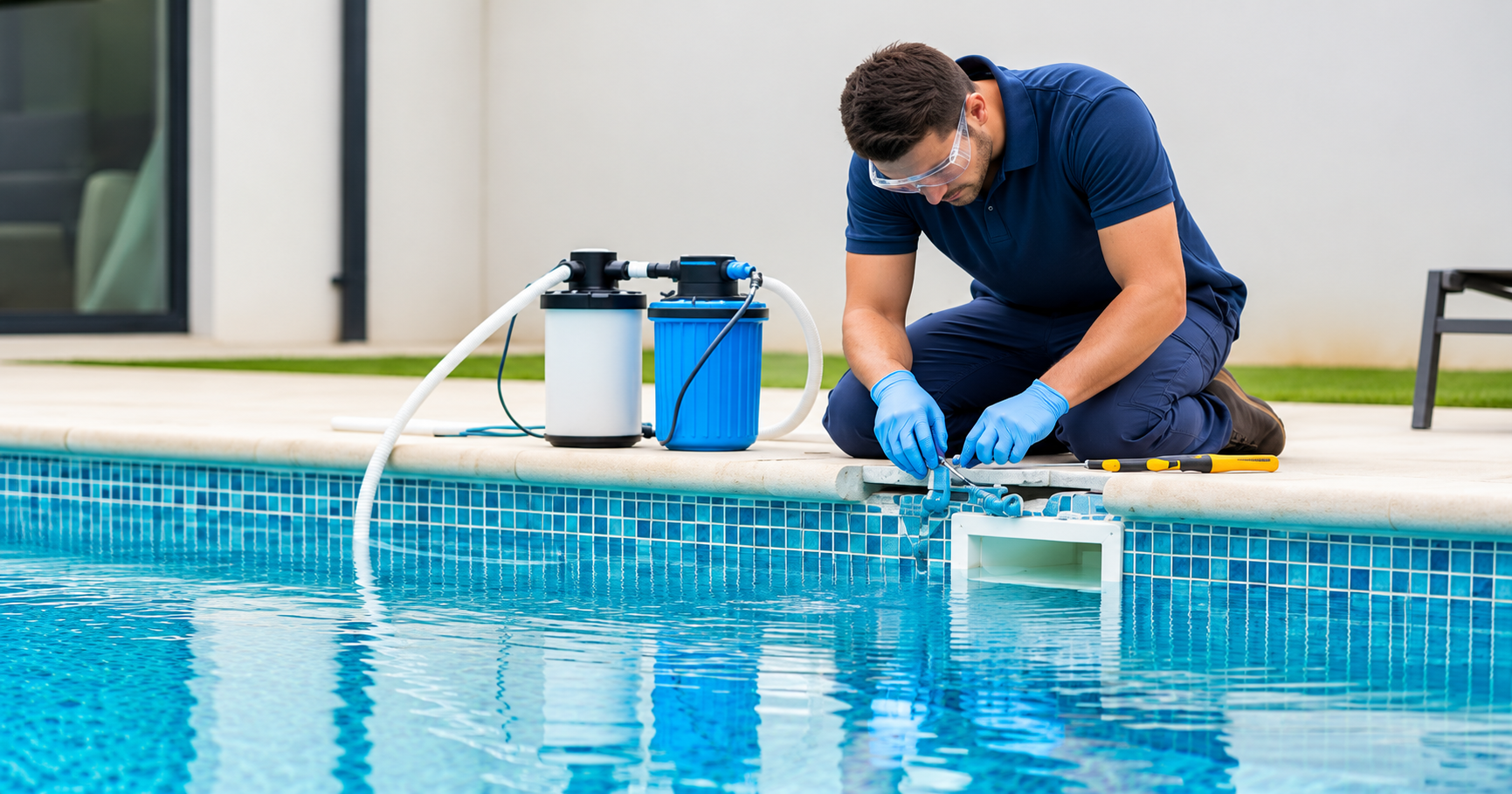
If chlorine levels keep dropping, algae returns quickly, or your salt system keeps showing warning codes, the problem may be more than a simple adjustment. A dirty salt cell may need cleaning, while recurring errors, poor output, or inaccurate readings can indicate a repair or replacement issue.
For homeowners looking for salt system repair in Miami, recognizing the warning signs early can help prevent larger water-quality problems. Miami pools operate year-round and often deal with heat, heavy rain, frequent swimming, and changing water chemistry, all of which can affect sanitizer demand and salt-system performance. Pool Wizards provides salt system cleaning, troubleshooting, repair, replacement, and installation for Miami-area pools.
How Does a Pool Salt System Work?
A salt system, also called a salt chlorine generator, uses dissolved salt in the pool water to produce chlorine. As water moves through the circulation system, it passes through the salt cell. The cell converts chloride from the dissolved salt into chlorine, which then sanitizes the pool.
For the system to work properly, several conditions must be in place:
- Correct salt concentration
- Proper water flow
- Balanced water chemistry
- A clean and functioning salt cell
- Working sensors
- Reliable electrical components
- Correct control settings
A saltwater pool is still a chlorine pool. The main difference is that chlorine is generated by the system rather than added manually in the same way as a traditional chlorine pool.
Consistent saltwater pool maintenance is still necessary to keep the system operating reliably.
7 Warning Signs Your Salt System May Need Cleaning or Repair
Common signs of salt-system trouble include low chlorine, recurring error codes, scale buildup on the salt cell, returning algae, cloudy water, weak chlorine production, and salt readings that do not match independent testing.
Chlorine Levels Keep Dropping
One of the clearest warning signs is chlorine that stays low even when the system appears to be running.
Possible causes include:
- Mineral buildup on the cell
- An aging salt cell
- Incorrect salt concentration
- Low water flow
- Electrical faults
- Incorrect output settings
If chlorine remains low after normal adjustments, professional Miami salt system repair may be needed to identify the cause.
Warning Lights or Error Codes Keep Appearing
Salt systems use alerts and error codes to indicate operating problems.
Warnings may point to:
- Low salt
- High salt
- Low flow
- Cell faults
- Sensor problems
- Communication errors
Repeatedly resetting the system without identifying the issue may only delay proper diagnosis.
White Scale Is Building Up on the Salt Cell
White or crusty deposits usually indicate mineral scale. As buildup covers the cell plates, chlorine production may become less efficient. Professional pool salt system cleaning can remove deposits and allow the cell to be inspected for damage. Cleaning should follow the equipment manufacturer’s guidance because aggressive or unnecessary acid cleaning can shorten cell life.
Algae Keeps Coming Back
Recurring algae can be a sign that the salt system is not producing enough chlorine. A generator may appear to be working while still producing less sanitizer than the pool needs. This matters in Miami, where warm temperatures, strong sunlight, frequent swimming, and rainfall can increase chlorine demand.
Pool Water Becomes Cloudy
Cloudy water can have several causes, but low sanitation is one of them. If the salt system is not generating enough chlorine, contaminants can build up and affect water clarity. Filtration, circulation, water chemistry, and algae should also be checked before assuming the salt system is the only cause.
The System Runs but Produces Little or No Chlorine
A powered salt system can still fail to generate adequate chlorine.
Possible causes include:
- Scale buildup
- A worn salt cell
- Flow problems
- Sensor issues
- Control-board faults
- Incorrect settings
This is a common reason homeowners seek salt system repair in Miami.
Salt Readings Do Not Match Manual Testing
If the system reports low or high salt while independent testing shows a different result, the problem may involve:
- Sensor calibration
- Cell condition
- Temperature effects
- Control-system faults
Do not keep adding salt based only on a questionable display reading. Confirm the actual salt level first.
Does Your Salt Cell Need Cleaning or Replacement?
Cleaning and replacement solve different problems.
Salt Cell May Need Cleaning | Salt Cell May Need Replacement |
Visible calcium or scale buildup | Cell is physically damaged |
Chlorine output gradually declines | Output stays low after cleaning |
Water flow is normal | Error messages repeatedly return |
Cell is otherwise in good condition | System reports cell failure |
Performance improves after cleaning | Cell is worn and no longer reliable |
Cleaning may restore performance when mineral buildup is the main issue.
Replacement may be more appropriate when the cell is damaged, repeatedly fails, or no longer produces chlorine reliably after proper cleaning.
Why Does Salt Cell Buildup Happen?
Salt cell buildup forms when minerals in pool water create scale on the cell plates.
Common contributing factors include:
- High calcium hardness
- Elevated pH
- Water chemistry imbalance
- Long intervals between inspection
- Warm operating conditions
As scale accumulates, it can interfere with chlorine production. Proper chemistry and regular saltwater pool maintenance can reduce excessive buildup and help identify problems earlier.
Why Salt Systems Can Work Harder in Miami
Miami pools often operate throughout the year, so salt systems can accumulate more operating hours than systems in seasonal climates. Local conditions can also change chlorine demand quickly.
Heavy Rain
Rain can dilute pool water and affect salt concentration, sanitizer levels, and overall chemistry.
Hot Weather
Higher temperatures and strong sunlight can increase chlorine demand.
Frequent Swimming
Swimmers introduce sunscreen, body oils, sweat, and other contaminants that increase sanitizer demand.
Algae Pressure
Warm water combined with low chlorine can allow algae to develop quickly. Because Miami pools operate year-round, problems with chlorine production can become noticeable faster than in seasonal pools that spend months shut down. After heavy rain, major storms, high swimmer use, or algae problems, a salt system may need inspection sooner than a fixed maintenance schedule would suggest.
Salt System Problems May Actually Come From Other Pool Equipment
Not every salt-system warning means the salt cell itself is defective. The system depends on proper circulation, filtration, electrical controls, and water flow.
Low Water Flow
Low-flow errors may be caused by:
- Dirty filters
- Pump problems
- Clogged baskets
- Closed valves
- Plumbing restrictions
If flow remains weak, pool filter cleaning and repair or pool pump repair may be more appropriate than replacing the salt cell.
Electrical or Control Problems
Problems can also involve:
- Wiring
- Automation systems
- Sensors
- Control boards
- Power supplies
In these cases, broader pool equipment repair may be required. This is why accurate diagnosis matters before replacing parts.
Why Does My Salt System Say Low Salt When the Salt Level Is Normal?
A low-salt warning does not always mean more salt is needed.
Possible causes include:
- Sensor malfunction
- Calibration problems
- Salt-cell wear
- Temperature-related readings
- Control-system faults
- Incorrect display readings
Always confirm the actual salt concentration with independent testing before adding more salt. Adding unnecessary salt can push the pool outside the desired operating range and create additional system issues. If the system consistently reports low salt despite normal test results, professional inspection can help determine whether the problem involves the sensor, cell, or control system.
Salt System Cleaning vs. Repair vs. Replacement
A quick decision guide can help clarify what type of service may be needed.
Cleaning may be enough when:
Scale buildup is the main issue and chlorine output improves after the cell is cleaned.
Repair may be needed when:
Sensors, controls, wiring, or replaceable system components are malfunctioning.
Replacement may make more sense when:
The cell is worn, output remains unreliable, or the system repeatedly fails despite repair.
Service | When It May Be Needed |
Cleaning | Scale or mineral buildup |
Troubleshooting | Error codes or inconsistent readings |
Repair | Sensor, control, connection, or component failure |
Cell replacement | Cell no longer produces chlorine reliably |
System upgrade | Existing equipment is outdated |
New installation | Pool needs a new or replacement salt system |
Pool Wizards provides salt-cell cleaning, troubleshooting, replacement, upgrades, and new system installation depending on the condition of the equipment.
8 Ways to Prevent Common Salt System Problems
Test Chlorine Regularly
Do not rely only on the system display. Confirm that the pool is maintaining an appropriate sanitizer level.
Monitor Salt Levels
Compare the system reading with independent water testing when the numbers appear unusual.
Maintain Balanced Water Chemistry
Proper pH, alkalinity, and calcium hardness can help limit excessive scale formation.
Inspect the Salt Cell
Check periodically for visible buildup or damage.
Maintain Good Water Flow
Clean baskets and filters so enough water moves through the salt cell.
Investigate Warning Lights
Do not repeatedly reset alerts without understanding the cause.
Watch for Algae or Cloudiness
Changes in water quality may indicate that chlorine production is declining.
Schedule Service When Output Remains Inconsistent
If chlorine production remains low despite proper salt levels, chemistry, and circulation, professional diagnosis may be needed.
A residential weekly pool service can also help monitor chemistry, flow, filtration, and equipment condition before small issues become larger repairs.
When Should You Call for Salt System Repair in Miami?
Professional service is appropriate when:
- Chlorine stays low
- Error codes repeatedly return
- Salt readings are inaccurate
- Heavy scale is visible on the cell
- Cleaning does not restore output
- Algae keeps returning
- Water flow appears normal but chlorine remains low
- Electrical or control problems are suspected
- The system may need an upgrade or replacement
Persistent problems should be diagnosed before poor chlorine production leads to larger water-quality issues. Professional salt system repair in Miami can help determine whether the system needs cleaning, troubleshooting, repair, cell replacement, or a full equipment upgrade.
Low Chlorine or Repeated Salt-System Errors?
Low chlorine, recurring warning codes, heavy scale, and inaccurate salt readings are signs that the system needs more than repeated adjustments. Miami’s year-round pool season makes dependable chlorine production especially important for keeping water properly maintained.
If chlorine production keeps dropping, the salt cell is heavily scaled, or warning codes continue returning, Pool Wizards can inspect the system and determine whether cleaning, repair, cell replacement, or an upgrade is the right next step. Schedule Salt System Service to identify the problem and restore reliable operation.
FAQs
How do I know if my pool salt system is not working?
Common signs include low chlorine, repeated warning lights, error codes, algae growth, cloudy water, inaccurate salt readings, or a generator that appears to run without producing enough chlorine.
How often should a pool salt cell be cleaned?
There is no universal cleaning schedule. Frequency depends on mineral buildup, water chemistry, usage, operating conditions, and manufacturer recommendations. The cell should be inspected and cleaned when buildup begins affecting performance.
How long does a pool salt cell usually last?
Salt-cell lifespan depends on usage, water chemistry, operating hours, maintenance, and manufacturer specifications. A professional inspection can help determine whether poor performance is caused by buildup, system faults, or normal cell wear.
Can I keep using my pool if the salt system is not producing enough chlorine?
The important issue is whether the water has an appropriate sanitizer level. If chlorine is too low, the pool may not be properly sanitized. Test the water and correct the issue before relying on normal use.
Why does my salt system say low salt when testing shows a normal level?
Possible causes include sensor problems, calibration issues, cell condition, temperature effects, or control-system faults. Independent testing can confirm the actual salt level.
Can a bad salt system cause algae?
Yes. If chlorine production is too low, algae can develop more easily. Filtration, circulation, and chemistry should also be checked.
Should I repair or replace my salt system?
Repair may be appropriate when a specific sensor, control, connection, or replaceable component has failed. Replacement may make more sense when the cell or system is older, repeatedly fails, or cannot maintain reliable chlorine production.